| |

What Was Your Major and Does It Matter Now?

If you’ve been reading much of the news about the recent Equifax data breach, you may have seen someone asking whether the Chief Information Security Officer is actually qualified for her job, based on her undergrad degree being in music.

As others have pointed out, what her undergrad studies were probably didn’t have much to do with whether she was qualified, because the technology she was responsible for in her current position didn’t even exist when she went to college. The hoopla, however, is somewhat informative in terms of showing us how many people haven’t figured out that the world has changed.

The logic of their argument seems to be that she went to college, studied music, then got a job in tech later, and isn’t qualified for it because she doesn’t have the college credentials. This line of thinking ignores two things though.

  • It ignores the reality of technology:

Technology is constantly evolving, and is constantly being improved upon. Let’s take even a typical 35 year old with an undergrad degree in computer science who graduated at 25. How “qualified” is that person to work with current technology? The tech they studied to earn that degree is at least 10 years old now. What relevance does it even have? The answer to whether the person is qualified has little to do with what their college studies included, and has everything to do with what they’ve done in the ensuing 10 years.

Have they worked in technology, hands on, with some of the same tools we want to hire them to work with? Have they continued to educate themselves on the various tools and our industry? Or did they get their degree, go work in something completely unrelated and now want to come back without having been involved in 10 years? There’s a huge difference between those two things.

  • It ignores the reality of adult life:

As adults, we are constantly learning. The idea that education stops once you complete your schooling is absurd. The idea that in your early twenties you have all the tools you will need to excel in your career is absurd. The idea that this is what you are going to be doing for the next 40+ years is absurd. Once upon a time, I was an Accounting major. eDiscovery wasn’t even an industry when I was in college. How do you think I got here? By continuing to learn and develop new skills throughout my life. That practice eventually led me to develop new interests in technology, law, teaching, etc. I’ve had some great opportunities to do different things that I could never have imagined when I was in college because the opportunities didn’t exist yet!

I’m not trying to talk anyone out of going to college and being degreed, but the reality of adult life is that degree is only as good as you continue to be going forward, and if that degree is in Philosophy because you just loved studying the topic, and now you want to work in an industry that maybe pays a bit more lucratively, don’t let the fact that you didn’t study it in college stop you from going forward and learning everything you can now.

Heck, we have enough of a shortage of qualified cybersecurity experts as it is, let’s not discourage adults who are out of college from trying to learn the skills and make it even harder to fill that gap!

Similar Posts

  • What I’m Sharing (weekly) July 12, 2020

    Ways companies can measure workers’ mental health

    A Professional Recruiter’s Top 5 Insider Tips for Stress-free Networking and Interviewing

    Law Firms Are Seeing Renewed Competition—from Clients
    – “Corporate legal teams, under the gun to cut costs and empowered by powerfully simple technology, are increasingly in-housing work that was once sent to outside counsel.”

    The pandemic is wrecking the typical 9-to-5 workday. Good riddance.

    Be aware of how anxiety affects your job search skills

    No Excuse Not to Use a Password Manager

    Working Through a Personal Crisis

    The Expanding Role and Influence of the Modern Litigation Support or E-Discovery Manager

    The Good, The Bad, And The Ugly Side Of AI

    Stop Using 123456 as a Password

    Tell Congress to Vote Yes on Giving Us All Access to Affordable, High-Speed Internet
    – If much of the world moves to #WFH, affordable internet will be the dividing line for who can work, and who cannot.

    Gender Pay Gap Wide Atop In-House Counsel Ladder, May Be Closing

    Exif Data: What is it?

  • Shared Links (weekly)

    Best Practices for Organizations to Mitigate Risks in Collaboration Software

    McKinsey report: 62% of workers worry about their mental health

    The way we train AI is fundamentally flawed

    Estate planning means organizing passwords

    Microsoft 365 is going full cop on employees with constant monitoring

    Don’t Let Amazon Spammers Scam Your Grandma this Holiday Season

    Why Start-Up Culture Still Hides Mental Health Struggles

    5 meaningful ways to gift your employees this holiday

    Proportionality: Cost Remains The Bottom Line in eDiscovery

    C’mon! Bates Numbering Native Production is Easy!

    This Is How To Make It Hard To Work With You

    The cult of busy.

    Loneliness Is A Mental Health Issue, Can Technology Help?

  • |

    Linked: Forget ‘networking’ — just connect with people you find interesting

    Justin also has some good advice for how to “be a good hang” online and make friends. I know more than a few people who could use that advice to be a little less awkward online. (i.e. Compliment people’s work, not their appearance, um yes!)

    Check it out at the link below, but if I was going to give my own take on that idea, is that for my own social media I usually try and consider what I have to offer the people who choose to follow me. I have this blog, obviously. I can share some other, useful, information, and even a laugh or two mixed in.

    For me, most of what I do online goes back to my background in training. I learn something, and I want to share that with others. So I do.

    And I try not to be “cringey”. 😉

  • AI Junk Already Ruining Dating Apps?

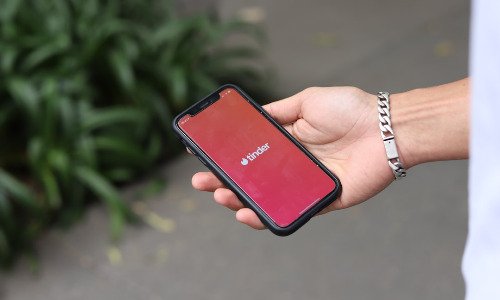
    Tinder Using Video Selfies to Verify User Identities Because of AI Selfies

    Of course, the problem is that short videos are going to be easy enough to create using AI as well, so what will be the next step dating apps have to take to verify the identity of their users and make sure customers aren’t spending all their time on the app talking to fake AI-generated profiles? Or is this the end of that entire business model?

    Don’t think dating apps are the only thing at risk with AI. Any online service based on contributions by authors, artists, musicians, etc., is at risk of being overrun by AI junk. In some cases, it’s probably already happening.

  • | |

    SmartSetr

    Kevin Devin has a nice screencast over at Friends in Tech showing off a little tool he found from Eric Appel called SmartSetr that lets you create dynamic sets on Flickr by tag or date, etc. I’ll definitely be taking a look at that one soon. Another tool that I might take a look at…

Leave a Reply

This site uses Akismet to reduce spam. Learn how your comment data is processed.

To respond on your own website, enter the URL of your response which should contain a link to this post's permalink URL. Your response will then appear (possibly after moderation) on this page. Want to update or remove your response? Update or delete your post and re-enter your post's URL again. (Find out more about Webmentions.)