Shared Links (bi-weekly) July 26, 2026
For more like this, subscribe to the newsletter and get these links and more in your email.


For more like this, subscribe to the newsletter and get these links and more in your email.

e aren’t disciplined enough to stop ourselves, especially when the culture rewards those who don’t. In my opinion, that’s what most organizations get wrong: they talk about not burning out, not working too many hours, and maybe they even understand the negative impacts on work quality that come from overwork.
But who gets the kudos during team meetings or all-hands meetings? It’s not the ones setting boundaries to protect their mental health. It’s the ones who work all the time.

For more like this, subscribe to the newsletter and get these links and more in your email.

Wait, I thought AI was supposed to give us more time back?
Turns out that’s not what is going on; the AI is creating more work and raising expectations that we all keep doing more.
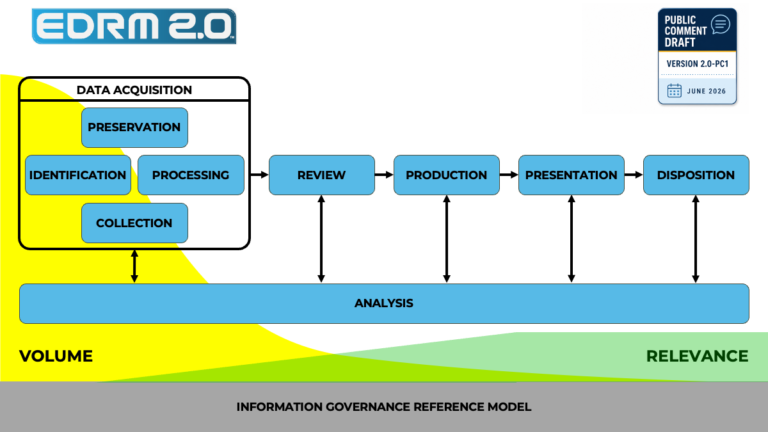
Those of you in the eDiscovery arena might already be aware of this new public comment period for the EDRM version 2.0. I took a quick look at it, and the one thing I will say is that I agree that eDiscovery is part of the Information Governance strategy for every firm, so I was glad to see that model as the underlying thread.
It also helps, when thinking about AI, to bring it into the full IG scope rather than considering it only as an eDiscovery problem. Because it’s likely not that big of an eDiscovery problem, yet, but it’s absolutely an IG problem.

In the end, if we shouldn’t trust AI answers, why use AI for search? Using this as your legal argument gives the game away: Google is quickly killing its own product and selling us AI. But it doesn’t want to be held responsible for the damage it does when the AI gets it wrong.
Sorry, whether a court agrees or not, I don’t trust you.